


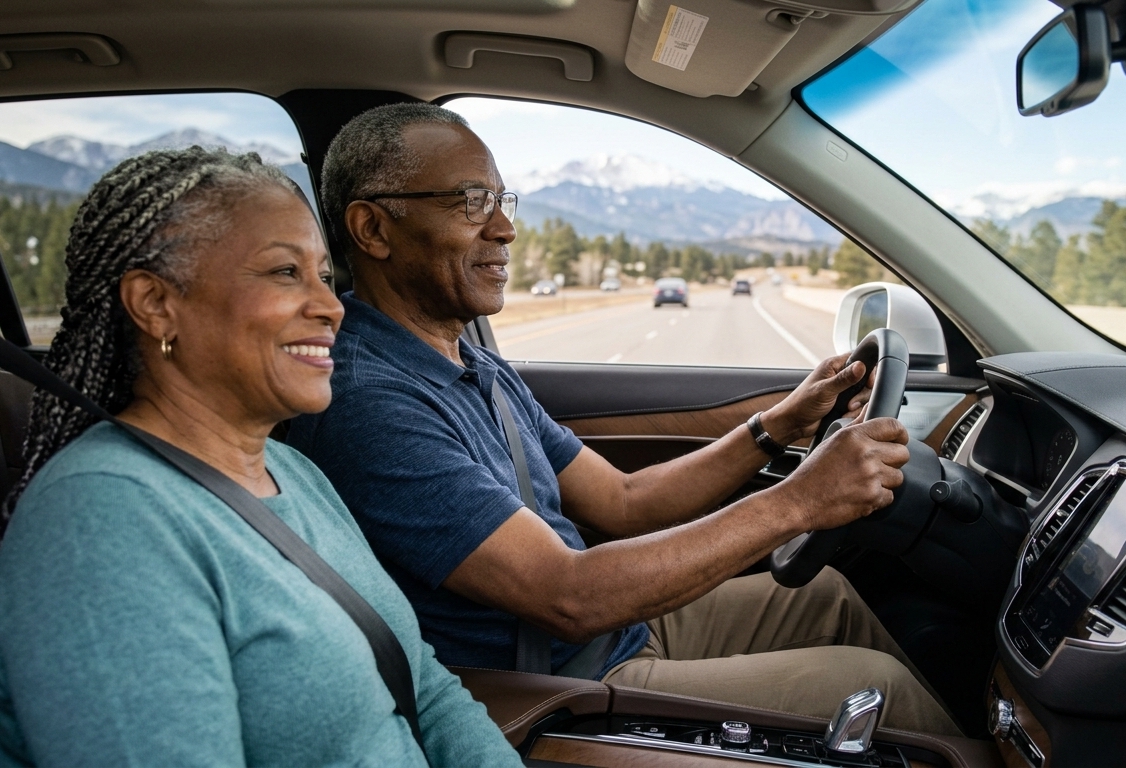
Driving can provide older adults with independence, flexibility, and the ability to stay connected with family, friends, medical appointments, shopping, and community activities. However, aging can sometimes bring changes in vision, hearing, reaction time, strength, or mobility that may affect driving.
That does not automatically mean a senior needs to stop driving. Instead, older adults and their families can take steps to promote driving safety for seniors and determine whether additional support may be helpful.
For seniors in Denver, Aurora, and throughout Colorado, regular attention to driving habits and overall health can help make transportation decisions safer and more comfortable.
Why Driving Safety Matters for Seniors
Safe driving requires several skills working together, including vision, attention, coordination, decision-making, and the ability to react to unexpected situations.
Some age-related changes can affect these abilities. Certain medications, health conditions, fatigue, or physical limitations may also influence driving.
Paying attention to changes early can help seniors and their families address potential concerns before they become serious problems.
1. Schedule Regular Vision and Hearing Checks
Clear vision is essential for recognizing traffic signs, pedestrians, road markings, vehicles, and changing road conditions.
Older adults should have their vision checked regularly and follow their healthcare professional’s recommendations.
Hearing is also important because drivers may need to recognize horns, emergency vehicles, or other sounds around them.
2. Review Medications With a Healthcare Professional
Some medications can cause side effects such as drowsiness, dizziness, blurred vision, or slower reactions.
Seniors should talk with their healthcare professional or pharmacist about medications and potential side effects that could affect driving.
Never stop taking a prescribed medication simply because of concerns about driving without first discussing it with the appropriate healthcare professional.
3. Keep the Vehicle Well Maintained
Regular vehicle maintenance can help reduce preventable problems on the road.
Check important components such as:
- Tires
- Brakes
- Headlights and taillights
- Windshield wipers
- Mirrors
- Seat belts
- Fluid levels
A vehicle that is properly maintained can help provide a safer driving experience.
4. Minimize Distractions
Distractions can affect any driver, regardless of age.
Seniors should avoid texting or using a phone while driving and keep conversations, music, navigation systems, and other distractions under control.
Before starting the vehicle, adjust mirrors, seats, climate controls, and navigation settings so attention can remain on the road.
5. Consider Driving During Daylight
Some older adults may find nighttime driving more challenging because of reduced visibility, glare, or difficulty seeing road markings.
If nighttime driving has become uncomfortable or difficult, consider limiting driving to daylight hours and favorable weather conditions.
6. Choose Familiar Routes When Appropriate
Familiar roads may be easier to navigate, especially when traffic is light.
When possible, seniors can plan routes ahead of time and avoid complicated intersections, unfamiliar areas, or heavy traffic if those situations create discomfort.
Navigation technology can also help with directions, but it should be programmed before driving whenever possible.
7. Allow Extra Time
Rushing can increase stress and make it more difficult to focus.
Give yourself plenty of time to reach an appointment, store, or other destination. Leaving earlier can reduce the temptation to speed or make hurried decisions.
8. Be Extra Careful During Poor Weather
Rain, snow, ice, fog, and other weather conditions can make driving more challenging.
Colorado weather can change quickly, so seniors should consider current road and weather conditions before leaving home.
If conditions are unsafe or a senior does not feel comfortable driving, postponing the trip or arranging another transportation option may be appropriate.
9. Pay Attention to Changes in Driving Ability
Families can watch for changes that may indicate a senior is experiencing difficulty behind the wheel.
Potential warning signs may include:
- Frequent minor accidents or near-misses
- Getting lost on familiar routes
- New dents or scratches on the vehicle
- Difficulty staying in a lane
- Missing traffic signs
- Confusion at intersections
- Trouble judging distances
- Increased anxiety about driving
- Receiving repeated concerns from family or friends
One warning sign does not necessarily mean someone needs to stop driving. However, noticeable changes should be taken seriously and discussed respectfully.
10. Consider a Professional Driving Evaluation
If there are concerns about driving ability, a professional driving evaluation may provide useful information.
An occupational therapist or qualified driving rehabilitation professional can assess specific driving skills and may provide recommendations for safer driving or vehicle adaptations.
A healthcare professional can also help evaluate medical or physical factors that may affect driving.
Staying Independent When Driving Becomes Difficult
For some seniors, there may come a time when driving is no longer comfortable or appropriate. Losing the ability to drive can feel like a major change, but it does not have to mean losing independence.
Families can explore alternatives such as:
- Rides from family or friends
- Community transportation programs
- Transportation services for older adults
- Rideshare services when appropriate
- Local senior transportation resources
- Assistance from caregivers
Planning transportation options before they are urgently needed can make the transition easier.
How In-Home Care Can Help Seniors
When transportation or daily activities become more challenging, in-home care for seniors can provide additional support.
Depending on an individual’s care needs and service plan, caregivers may assist with everyday activities, companionship, meal support, mobility assistance, and other forms of support at home.
For individuals who require medical care, private duty care and skilled nursing may also be available based on their healthcare needs and care plan.
At Exclusive Healthcare, we provide in-home care and private duty skilled nursing services for seniors and individuals throughout Colorado. Our goal is to help individuals receive appropriate support while maintaining comfort, dignity, and independence at home.
Talk With Your Loved One About Driving
Conversations about driving can sometimes be difficult for families. Instead of approaching the subject as a demand to stop driving, focus on safety and listen to your loved one’s concerns.
Ask questions such as:
- Do you feel comfortable driving at night?
- Are there roads or situations you try to avoid?
- Have you noticed any changes in your driving?
- Would you feel comfortable having a professional driving evaluation?
- What transportation options would make things easier if you needed them?
Approaching the conversation with respect can help families work together to find practical solutions.
Driving safety for seniors is about more than simply deciding whether someone should continue driving. Regular vision and hearing checks, medication reviews, vehicle maintenance, minimizing distractions, planning routes, and recognizing changes in driving ability can all be part of responsible transportation planning.
For seniors in Denver, Aurora, and throughout Colorado, having alternative transportation and home care options available can also provide peace of mind when driving becomes more difficult.
If your loved one needs additional support at home, Exclusive Healthcare is here to help.
Leave a Reply