


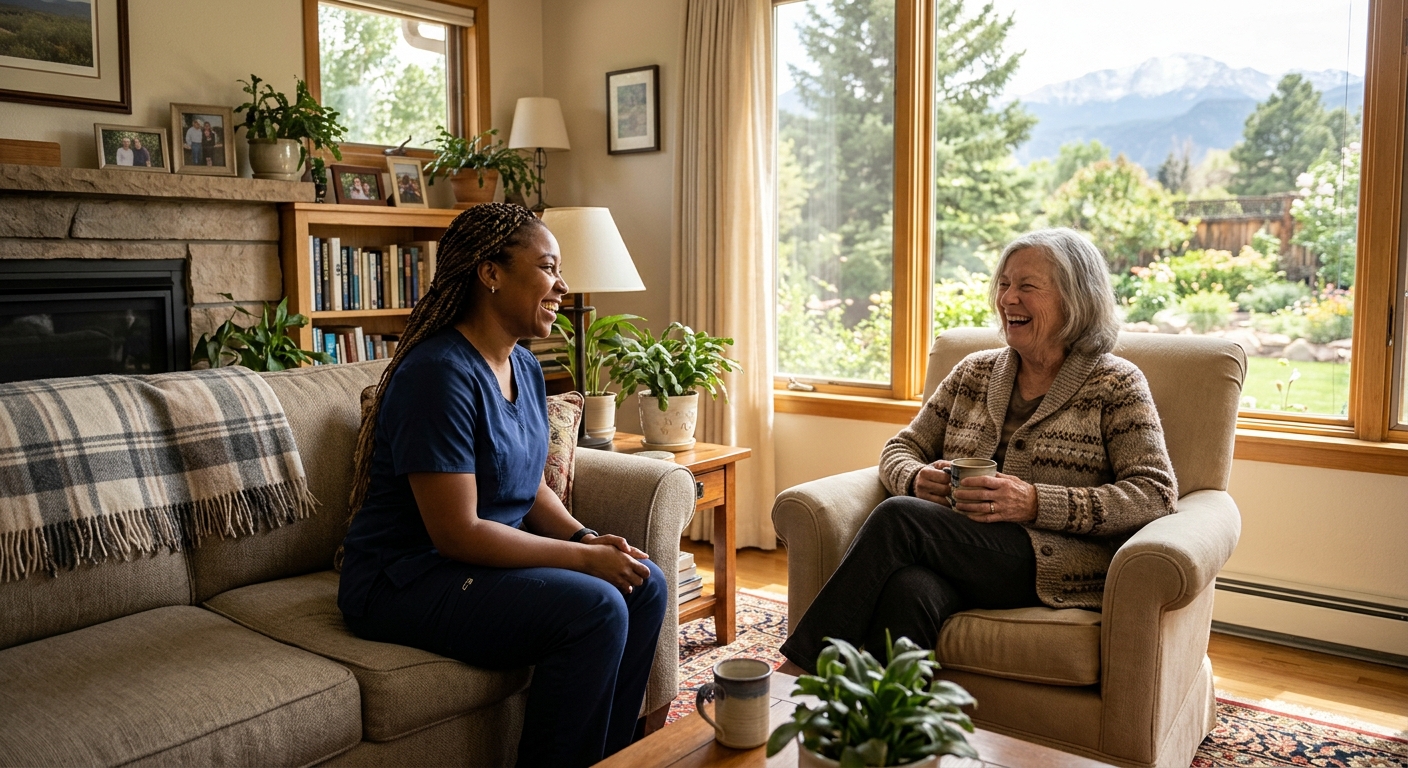
Living alone can offer seniors independence, privacy, and the comfort of remaining in a familiar home. However, without regular social interaction, some older adults may experience loneliness, isolation, or difficulty staying engaged in everyday activities. Companionship for seniors living alone can help make daily life more enjoyable by providing meaningful conversation, emotional support, and opportunities to stay connected.
For families in Denver and throughout Colorado, understanding the value of companionship can help them find ways to support an aging loved one’s well-being, independence, and quality of life.
Why Companionship Matters for Seniors Living Alone
As people age, their social routines may change. Retirement, the loss of a spouse or friends, mobility challenges, and living far from family can make it harder to maintain regular social connections.
Even seniors who enjoy living independently may benefit from having someone to talk with, share a meal, or spend time with during the day.
Companionship provides opportunities for meaningful interaction and helps seniors feel valued, heard, and connected. Regular visits can also create a comforting routine, giving older adults something to look forward to throughout the week.
7 Benefits of Companionship for Seniors
1. Helps Reduce Feelings of Loneliness
Loneliness can affect emotional well-being at any age. For seniors who live alone, long periods without conversation or social interaction may contribute to feelings of isolation.
Having a trusted companion visit regularly gives older adults an opportunity to talk about their day, share memories, discuss their interests, and feel connected to another person.
Although companionship cannot eliminate every feeling of loneliness, consistent social interaction can help seniors feel less alone and more supported.
2. Supports Emotional Well-Being
Aging can bring significant life changes, including retirement, changes in physical abilities, or the loss of loved ones. These experiences may leave some seniors feeling overwhelmed or disconnected.
A compassionate companion can offer a listening ear, friendly conversation, and encouragement during everyday challenges.
Feeling heard and understood can help older adults maintain a sense of connection and belonging. Companionship is not a replacement for professional mental health care, but it can be a valuable part of a broader support system.
3. Encourages Mental Stimulation
Keeping the mind engaged is an important part of healthy aging. Conversation, hobbies, games, and learning activities provide opportunities for seniors to remain mentally active.
Companionship can include activities such as:
- Reading books or discussing favorite stories
- Working on puzzles or playing card games
- Sharing family memories and photographs
- Listening to music or discussing current interests
- Participating in creative hobbies
- Exploring technology to stay connected with family
These activities offer enjoyable ways to spend time and encourage ongoing social engagement.
4. Helps Maintain Daily Routines
When seniors live alone, it can sometimes become difficult to maintain consistent daily routines, especially after a major life change or when energy and mobility decrease.
A regular companion visit can provide structure and encouragement throughout the day. Depending on the individual’s needs and the services arranged, companionship may include conversation during meals, encouragement to participate in hobbies, or support with everyday activities.
Predictable routines can help seniors feel more comfortable and engaged in their daily lives.
5. Encourages Safe, Appropriate Physical Activity
Staying active can help older adults maintain strength, mobility, and independence. However, some seniors may feel less motivated to move around when they spend much of the day alone.
A companion can encourage activities suited to the senior’s abilities, such as seated exercises, simple stretching, or walking when appropriate and safe.
Activities should always reflect the individual’s mobility, medical guidance, and fall risk. Seniors who need hands-on mobility assistance may require additional support from an appropriately trained caregiver or healthcare professional.
6. Strengthens Social Connections
Companionship can help seniors maintain their relationships and feel more connected to the people and community around them.
A companion may help an older adult make a phone call to a family member, participate in a favorite hobby, or explore suitable community activities. These interactions can encourage continued engagement with family, friends, and others who share similar interests.
For seniors in Denver and surrounding Colorado communities, local recreation centers, senior programs, libraries, and educational activities may provide additional opportunities to build connections.
7. Provides Reassurance for Families
Family members may worry when an older loved one spends long periods alone, particularly if they live far away or cannot visit as often as they would like.
Regular companionship can give families another source of support and interaction for their loved one. Depending on the care arrangement, a companion may also communicate appropriate observations about changes in routine or general well-being.
Companionship does not replace emergency response systems, medical supervision, or necessary skilled nursing care. However, it can complement a family’s efforts to help an older adult remain comfortable and supported at home.
Signs a Senior Living Alone May Benefit From Companionship
Every older adult has different social needs. Some enjoy spending time alone, while others may benefit from more frequent interaction.
Families may want to consider additional companionship if they notice that a loved one:
- Frequently mentions feeling lonely or isolated
- Has fewer social interactions than in the past
- Seems less interested in hobbies or favorite activities
- Spends most of the day without meaningful conversation
- Has difficulty maintaining regular daily routines
- Expresses a desire for more company or support
These signs do not necessarily indicate a medical problem. However, a sudden change in mood, memory, behavior, or ability to manage daily activities should be discussed with a healthcare professional.
How to Choose the Right Companionship Support
Finding the right support begins with understanding the senior’s personality, preferences, routine, and individual needs.
Consider the following when exploring companionship services:
Personal interests: Look for opportunities to enjoy activities the senior already loves, whether that means reading, gardening, music, games, or conversation.
Consistent visits: A dependable schedule can help build familiarity and a trusting relationship.
Respect for independence: Companionship should support a senior’s choices and abilities rather than take over tasks they can safely manage themselves.
Communication with family: Discuss preferences, expectations, and any concerns that should be shared with appropriate family members.
Appropriate care services: If a senior also needs personal assistance, mobility support, medication administration, wound care, or other healthcare services, determine which services are needed and whether qualified caregivers or licensed healthcare professionals are required.
The best arrangement is one that respects the older adult’s dignity while providing the right level of support.
Companionship and Aging in Place in Colorado
Many seniors want to remain in their own homes for as long as possible. Familiar surroundings, established routines, and treasured memories can make home an important part of their independence.
Companionship can complement an aging-in-place plan by adding meaningful social interaction and helping seniors remain engaged in everyday life. For families in Denver, Aurora, and surrounding Colorado communities, in-home support may also help address changing needs while allowing loved ones to remain in a familiar environment.
The appropriate level of care depends on each person’s circumstances. Some seniors may benefit primarily from regular social visits, while others may need a combination of in-home assistance and skilled nursing services.
How Exclusive Healthcare Can Help
At Exclusive Healthcare, we understand the importance of individualized support for older adults and families across Colorado. Finding the right care can help families feel more confident as their loved ones navigate the challenges of aging.
Whether your family is exploring in-home support or needs private duty skilled nursing services, our team can help you discuss your loved one’s needs and determine what services may be appropriate.
Contact Exclusive Healthcare today to learn more about available care options.
Leave a Reply